
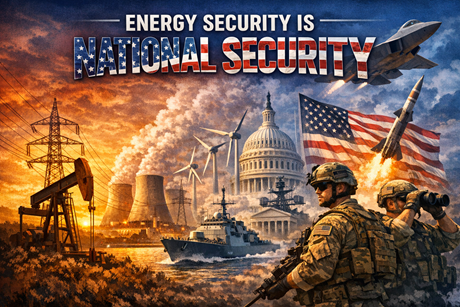
In the modern world, the strength of a nation is no longer determined only by its military power or economic size. One of the most crucial pillars of national stability today is energy security. Energy fuels industries, transportation, communication, and even defense systems. Therefore, ensuring a stable, affordable, and uninterrupted supply of energy has become directly linked to a nation’s sovereignty and security. The statement “Energy security is national security” is not just an idea, but a reality in today’s interconnected and conflict-prone world.
Energy security refers to the reliable availability of energy resources at affordable prices. For a country like India, which imports a large portion of its crude oil, this becomes a critical concern. A significant share of global oil supply passes through strategic routes such as the Strait of Hormuz, making these regions highly sensitive. Any disruption in such areas due to geopolitical tensions can lead to immediate spikes in fuel prices and shortages, affecting millions of people and the functioning of the economy.
The connection between energy and national security becomes even clearer during global conflicts. Tensions involving countries like Iran and Israel often result in instability in oil-producing regions. Such instability affects global supply chains and creates uncertainty in international markets. For developing nations, this can lead to inflation, rising transportation costs, and a slowdown in economic growth. In extreme cases, energy shortages can disrupt essential services such as electricity, healthcare, and defense operations.
Energy security is also closely tied to economic security. Industries depend on energy to function efficiently. A sudden rise in energy costs increases the cost of production, making goods more expensive and less competitive globally. This phenomenon, often referred to as imported inflation, directly impacts the common citizen by increasing the prices of daily necessities. Thus, energy insecurity can weaken a nation internally, even without direct external aggression.
Moreover, national security is not limited to traditional warfare. In the modern era, it includes cyber security, infrastructure protection, and resilience against global shocks. Energy infrastructure such as power grids, oil refineries, and pipelines are critical assets. Any attack or disruption to these systems can have severe consequences. Therefore, protecting energy resources and infrastructure is a key component of national defense strategies.
To address these challenges, countries are increasingly focusing on diversifying their energy sources. Renewable energy sources such as solar, wind, and hydropower are gaining importance as they reduce dependence on imported fuels and enhance self-reliance. Strategic petroleum reserves are also being developed to handle emergencies. Additionally, international cooperation and diplomatic efforts play a vital role in ensuring stable energy supply chains.
In conclusion, energy security is deeply intertwined with national security. A nation that cannot secure its energy needs risks economic instability, social unrest, and strategic vulnerability. In a rapidly changing global landscape, ensuring energy independence and resilience is not just an economic priority but a fundamental requirement for national strength and stability. The future of nations will depend significantly on how effectively they manage and secure their energy resources.