
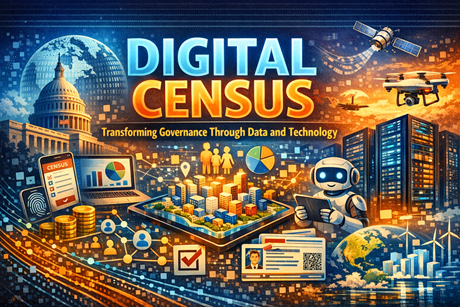
A census is the backbone of effective governance, providing essential data about a country’s population, socio-economic conditions, and demographic trends. As India prepares to undertake its first fully digital census, this transition marks a historic shift from traditional paper-based enumeration to a technology-driven process. The move toward a digital census reflects the broader vision of modern governance—efficient, transparent, and data-centric.
The digital census introduces several innovative features that enhance both the process and outcomes of data collection. One of the most significant advancements is self-enumeration, allowing citizens to submit their information online. This reduces dependency on manual data collection and minimizes errors arising from human intervention. Additionally, enumerators will use mobile applications for real-time data entry, ensuring faster processing and improved accuracy. The integration of technologies such as GPS tagging further strengthens data authenticity by verifying locations and preventing duplication.
The advantages of a digital census are far-reaching. First, it significantly improves the speed and accuracy of data collection. Unlike traditional methods that required months—sometimes years—for compilation and analysis, digital tools enable quicker data processing and dissemination. Second, it enhances transparency and accountability, as digital records can be easily audited and monitored. Third, it supports evidence-based policymaking, allowing governments to design targeted welfare schemes, allocate resources efficiently, and plan infrastructure development based on reliable data.
Moreover, a digital census plays a crucial role in advancing the vision of Digital India. It promotes the use of technology in public administration and encourages citizens to engage with digital platforms. The data generated can also support sectors such as education, healthcare, employment, and urban planning. For instance, accurate population data helps in determining the number of schools or hospitals required in a region, ensuring equitable development.
However, the transition is not without challenges. Issues such as the digital divide, data privacy concerns, and cybersecurity risks must be addressed. A significant portion of the population, particularly in rural areas, may lack access to digital devices or internet connectivity. Therefore, the role of enumerators remains crucial in ensuring inclusivity. Additionally, safeguarding sensitive personal data is essential to maintain public trust in the system.
In conclusion, the digital census represents a transformative step toward modern governance. By leveraging technology, it enhances efficiency, accuracy, and transparency in population data collection. While challenges exist, careful implementation and robust safeguards can ensure its success. Ultimately, a digital census will not only provide a clearer picture of the nation but also empower policymakers to build a more inclusive, responsive, and data-driven society.